












What is an Escalator and How Does It Work?

What is an Escalator and How Does It Work?

Published Mar-01-2026

Escalators have become an essential part of modern buildings. Whether it’s a shopping mall, airport, metro station, hotel, or office complex, most people use an escalator regularly without thinking about how it actually works.

As cities become busier and commercial spaces handle larger crowds, escalators are playing a bigger role in managing passenger movement efficiently. Today, an escalator in malls, transport hubs, and commercial buildings is not just about convenience. It helps improve accessibility, reduce crowding, and support smooth movement between floors.

Modern escalator systems are also becoming smarter and more energy-efficient. Companies such as KONE now offer integrated mobility solutions that combine elevators, escalators, and smart people-flow systems for airports, hotels, shopping centres, and high-rise buildings.

What is an Escalator?

An escalator is a motor-driven moving staircase designed to transport people continuously between different levels of a building.

Unlike elevators, escalators do not require waiting time because the steps move continuously in a loop. This makes them ideal for locations with heavy passenger traffic.

Escalators are commonly used in:
  • Shopping malls
  • Airports
  • Metro stations
  • Hotels
  • Hospitals
  • Commercial buildings
  • Railway terminals

They are especially useful in buildings where people need to move quickly and efficiently throughout the day.

How Does an Escalator Work?

An escalator works through a motorized chain mechanism that moves connected steps in a continuous circular loop. The steps remain level while moving upward or downward and flatten at the top and bottom for safe entry and exit.

Several systems work together to ensure smooth movement.

What is an Escalator and How Does It Work?

Iluminación de escaleras eléctricas

Escalator Stairs

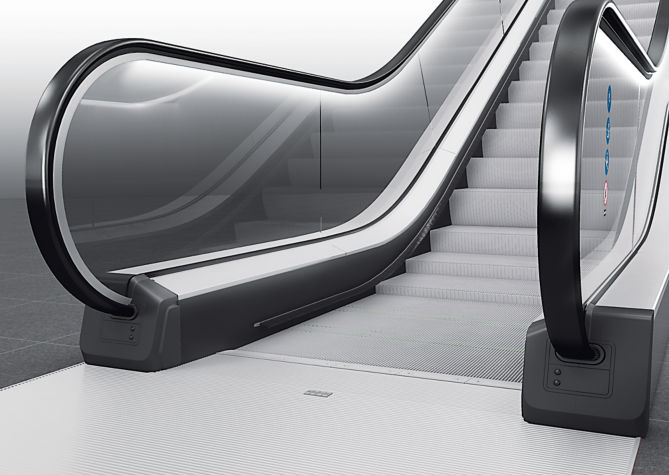
The moving steps, often called escalator stairs, are connected through a chain system. These steps are designed to stay horizontal during movement so passengers can stand comfortably.

Motor and Drive System

The motor powers the escalator and controls movement speed and direction. Modern systems increasingly use energy-efficient motors that reduce electricity consumption during low-traffic periods.

What is an Escalator and How Does It Work?

travelm110_LED_handrail_light_WHITE_FINAL_BC:669x475

Handrail Mechanism

The handrail moves at the same speed as the steps to improve passenger balance and safety.

What is an Escalator and How Does It Work?

What is an Escalator and How Does It Work?

Safety Systems

Modern escalators include several safety features such as:

  • Emergency stop buttons
  • Anti-slip step surfaces
  • Speed monitoring systems
  • Obstruction detection sensors

Many newer systems also include smart monitoring technology that helps maintenance teams detect technical issues early.

Different Types of Escalators

There are several escalator types designed for different building layouts and passenger requirements.

Parallel Escalators

These are the most common escalators and are usually installed side-by-side in malls, airports, and office buildings.

Crisscross Escalators

Commonly seen in retail stores and department stores, these escalators follow a zigzag arrangement that helps save floor space.

Walking Escalators

Also known as moving walkways, walking escalators transport passengers horizontally rather than vertically. These are often used in airports and exhibition centres.

Horizontal Escalators

Horizontal escalators are designed for long-distance flat movement in large public spaces and transport terminals.

Flat Escalator

A flat escalator, often called a travelator, is commonly installed in supermarkets and airports where passengers may carry luggage or shopping carts.

What is an Escalator and How Does It Work?

Escalator Dimensions and Planning

Proper escalator dimensions are important for passenger safety and efficient traffic movement.

Dimensions usually depend on:

  • Building size
  • Passenger volume
  • Installation space
  • Safety requirements

Most commercial escalators have widths ranging from 600 mm to 1000 mm.

Companies like KONE design customized escalator systems based on the people-flow requirements of hotels, malls, airports, and large commercial buildings. Tools such as the KONE Escalator Planner can help architects, consultants, and building owners evaluate different escalator configurations and identify the most suitable solution for their project.

What is an Escalator and How Does It Work?

What is an Escalator and How Does It Work?

Where Escalators are Commonly Used

Escalators are widely used in buildings with high passenger traffic, where people need to move quickly and efficiently between floors. They help improve pedestrian flow, reduce congestion, and enhance accessibility across different levels.

They are commonly installed in environments that require continuous, uninterrupted movement of large numbers of people throughout the day.

In retail environments, escalators help improve customer movement between floors while increasing visibility for stores and commercial spaces. Hotels and mixed-use developments also increasingly combine elevators and escalators as part of integrated mobility planning.

Escalator Price and Cost Factors

The overall escalator price depends on several factors, including installation complexity, passenger capacity, and technology features.

Cost is usually influenced by:
  • Escalator type
  • Building structure
  • Passenger traffic
  • Safety systems
  • Energy-efficient features

Heavy-duty escalators designed for airports and metro stations generally cost more because they are built for continuous high-volume operation.

What is an Escalator and How Does It Work?

Service_technician_Escalator_Shanghai-9348-1:669x475

Importance of Escalator Service and Maintenance

Regular escalator service is essential for safety, reliability, and long-term performance.

Professional maintenance usually includes:

  • Inspection of moving parts
  • Lubrication
  • Motor checks
  • Safety testing
  • Replacement of worn components

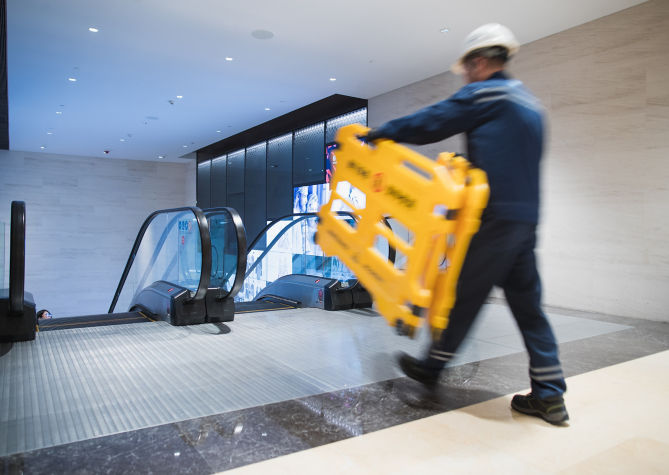
A reliable escalator company can also help reduce downtime through preventive maintenance and smart monitoring systems.

Many modern systems now use connected technology to monitor escalator performance in real time and identify faults before breakdowns occur.

What is an Escalator and How Does It Work?

What is an Escalator and How Does It Work?

Conclusion

Modern escalators are no longer just moving staircases. They have become an important part of how commercial buildings, airports, hotels, and public infrastructure manage passenger movement efficiently.

Understanding the different types of escalators, planning suitable escalator dimensions, and investing in regular escalator service can significantly improve long-term reliability and user experience.

As urban infrastructure continues to evolve, escalators will remain a critical part of modern mobility systems designed to support faster and safer movement of people.

Frequently Asked Questions (FAQs)

  • An escalator provides continuous movement through moving steps, while an elevator transports passengers inside a cabin between floors.

  • Escalators are commonly used in malls, airports, metro stations, hotels, hospitals, and commercial buildings with heavy foot traffic.

  • Escalators require inspections, lubrication, motor servicing, safety checks, and replacement of worn components to ensure smooth operation.

  • Outdoor escalators use weather-resistant materials and drainage systems, while indoor escalators are designed for controlled interior environments.

  • No. Escalators are best suited for buildings with continuous passenger movement and sufficient installation space. Smaller buildings may rely more on elevators instead.